

How to Support Down Syndrome Awareness Through Fashion
Posted by Editorial Team on on 3rd Nov 2026
Last Updated: November 4, 2026
Quick Summary
Support down syndrome awareness by wearing blue and yellow apparel, which invites conversations in everyday settings. Choose brands that name a specific charity partner, state a dollar amount per item, and show respectful, person-first messaging. Staying involved year-round through events and honest talk matters as much as the purchase.
- Blue and yellow are the widely recognized colors of Down syndrome awareness.
- Ask brands for the dollar amount per item, since a percentage of profit can be very little.
- Confirm a U.S. charity partner's 501(c)(3) status through the IRS Tax Exempt Organization Search.
- Look for designs that use respectful, person-first language and avoid pity framing.
- Adaptive clothing features like magnetic snaps and seated-cut pants can ease daily dressing.
Table of Contents
- Why Clothing Can Start a Real Conversation About Down Syndrome
- Down Syndrome Awareness Colors and How to Wear Them
- Step by Step: Choosing Awareness Apparel That Actually Helps
- How to Check Whether a Charitable Clothing Brand Gives Back
- Supporting Disability-Owned Businesses Through Your Purchases
- Ethical Design, Adaptive Fashion, and Ways to Participate Without Buying
- Keeping Your Down Syndrome Advocacy Going All Year
- Frequently Asked Questions
Why Clothing Can Start a Real Conversation About Down Syndrome
Down syndrome awareness starts with small, visible choices.
Down syndrome is a genetic condition that affects how a person develops, both physically and intellectually (the CDC). Most people know very little about it beyond the name.
Here is what makes apparel work as awareness:
- It is visible in everyday settings like school pickup, church, and work
- It invites questions instead of demanding attention
- It shows support across age groups, from toddlers to grandparents
The goal is not to wear a shirt and move on. The goal is to use that shirt as a starting point for a real relationship with the cause.
Down Syndrome Awareness Colors and How to Wear Them
Blue and yellow are the widely recognized colors of Down syndrome awareness. Wearing them is one of the simplest ways to show support, and it works across clothing, shoes, and accessories.
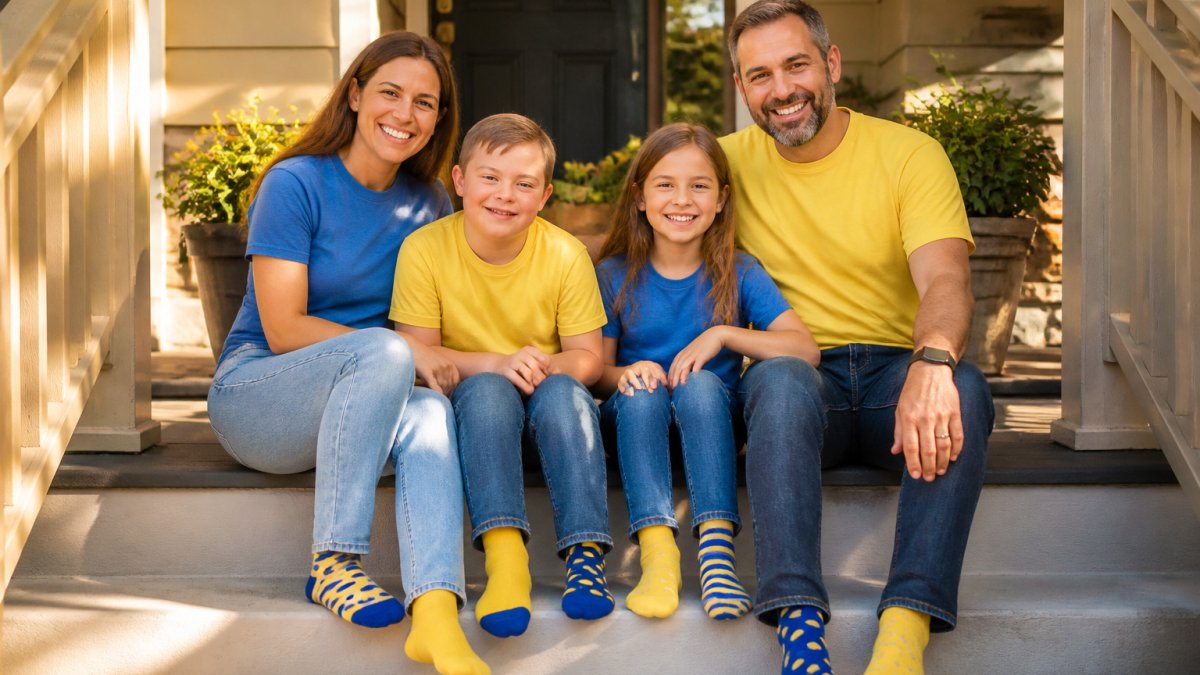
Blue and Yellow Shirts, Socks, and Accessories
You do not need a full outfit in awareness colors to make a difference. A single touch often does the job.
- Shirts: A blue or yellow graphic tee is the most common choice
- Accessories: Bracelets, pins, and hair ties in blue or yellow are easy to add
- Shoes: Blue or yellow laces can be a subtle, practical option
Mix colors when it fits your style. Pairing blue and yellow together is a strong visual signal.
Mismatched Socks and the Story Behind Them
Mismatched socks have become a popular way to mark Down syndrome awareness. The idea is to celebrate the individuality and uniqueness that people with Down syndrome bring to their families and communities.
If you want to try it, pick two socks in different patterns or colors. Let them be a little loud. The point is to be noticed and to talk about why you chose them.
Step by Step: Choosing Awareness Apparel That Actually Helps
Most awareness apparel lists stop at "buy a blue shirt." The harder question is whether the purchase does anything beyond signaling.
-
Name the purpose first. Decide whether you want everyday visibility, support for a specific event such as World Down Syndrome Day on March 21, or a gift for a family member. The purpose changes what you buy: an everyday tee gets worn dozens of times, while an event shirt may only appear once.
-
Choose a design you will actually repeat. A shirt that fits well and matches your existing wardrobe gets worn; a novelty item sits in a drawer. Favor messages written by or with people with Down syndrome over slogans that speak for them.
-
Read the message for respect. Look for language that centers the person ("a person with Down syndrome," not "a Down syndrome person") and avoids pity framing or jokes at the community's expense. If a design trades on cuteness or inspiration at the expense of dignity, skip it.
-
Identify the brand behind the product. Find the legal business name, the owner, and whether the company is disability-owned or employs people with disabilities. A brand page with a real story and named people is easier to verify than an anonymous storefront.
-
Find the named charity partner. A specific organization name is the minimum bar. "A portion of proceeds goes to charity" with no recipient is not verifiable. If the partner is a U.S. charity, confirm its 501(c)(3) status through the IRS Tax Exempt Organization Search before you trust the claim.
-
Ask for the dollar figure per item. A percentage of profit can be a few cents; a stated dollar amount per sale is concrete. Ask the brand directly, in writing, what amount reaches the charity for each item sold and when the donation is made.
-
Check the donation terms in writing. Look for a stated window (for example, "donations are sent quarterly") and a public report or receipt. A brand that cannot describe its own process is a brand whose claim you cannot rely on.
-
Plan the wear and the conversation. Decide in advance how you will answer the question "what does your shirt mean?" A one-sentence answer plus the name of a local organization is more useful than a slogan.
Watch out: a design that looks supportive can still misrepresent the community if no one with Down syndrome was involved in creating it.
The steps below set out the order to work through when judging whether an awareness purchase does more than signal support.
| Step | What to do | Note |
|---|---|---|
| 1. Name the purpose | Decide everyday visibility, a specific event, or a gift | Event shirts may be worn only once |
| 2. Choose a repeatable design | Pick something that fits and matches your wardrobe | Novelty items often sit unworn |
| 3. Read the message | Check for respectful, person-first language | Skip pity or joke framing |
| 4. Identify the brand | Find the legal name, owner, and employment | Disability-owned status helps |
| 5. Find the charity partner | Name a specific organization | Confirm U.S. status via IRS search |
| 6. Ask the dollar figure | Request the amount per item in writing | A percentage can be very little |
| 7. Check donation terms | Look for a stated window and a public receipt | No process means no verifiable claim |
| 8. Plan the conversation | Prepare a one-sentence answer and a local name | Slogans do less than a clear answer |
How to Check Whether a Charitable Clothing Brand Gives Back
Many brands say they give to charity. Some do it well. Others use cause marketing without much behind it. Here is how to check.
Start with the basics:
- Look for a named charity partner. Vague claims like "a portion goes to good causes" are a red flag.
- Check tax-exempt status. Many U.S. charities hold 501(c)(3) status. You can confirm this through the IRS Tax Exempt Organization Search.
- Ask for documentation. Five practical ways to verify a clothing brand's charitable impact can help you check this before you buy. A brand that donates should be willing to share how much it gave and to whom.
Watch for these warning signs:
- No specific amount or percentage is stated
- The charity partner is hard to find or verify
- The brand changes its cause story often
Our advice is to treat a brand's giving as something you can verify, not something you simply trust. For a fuller guide, see verifying charity donations from apparel brands.
Watch out: a "donation" that is only a percentage of profit can end up as very little money.
Supporting Disability-Owned Businesses Through Your Purchases
Buying from disability-owned businesses is another way to support the community. These companies often employ people with disabilities and reinvest in inclusive design and hiring.
To find them, look for certifications or public statements about ownership and employment. Then ask how the business supports its workers and customers. Your purchase sends a clear message that inclusion has a market.
Ethical Design, Adaptive Fashion, and Ways to Participate Without Buying
Support for Down syndrome awareness does not have to come from a shopping cart, and the purchases you do make can be held to a higher standard. This section covers three things most awareness guides skip: how to judge a design ethically, what adaptive fashion actually solves, and how to participate without buying anything new.
Ethical design: consent, representation, and language
A respectful design starts with who made it. Look for apparel created with input from people with Down syndrome or their families, not just about them. Ask three questions before you buy:
- Consent: Did the people pictured or quoted agree to be featured, and do they know how the image will be used?
- Representation: Does the design show a range of ages, abilities, and settings, or does it rely on a single stereotype?
- Language: Does the copy use person-first phrasing and avoid pity, inspiration, or "superhero" framing that flattens real people into a message?
A common pattern is a brand that uses a heart or chromosome graphic without any connection to the community. That is not automatically wrong, but it is weaker than a design that names a partner and shows its work.
Adaptive fashion: what it solves and how to evaluate it
Adaptive clothing uses design features that make dressing easier for people with disabilities, including some people with Down syndrome. The features to look for depend on the individual, but common ones include:
- Closures: magnetic snaps, hook-and-loop tape, or larger zipper pulls instead of small buttons
- Fit: seated-cut pants, higher backs, and stretch panels that accommodate different body shapes and mobility needs
- Comfort: flat seams, tagless labels, and soft fabrics for sensory sensitivity
The right choice is the one the wearer prefers, not the one with the most features. Ask the person who will wear the garment what gets in the way of dressing now, then look for that specific fix. Our adaptive clothing resource guide explains how these designs help families daily. For a family-focused look at how adaptive clothing improves daily living, start there.
Participating without buying new clothing
Lower-cost and lower-waste options matter, especially for families who cannot or do not want to spend on awareness merchandise:
- Restyle what you own. Pull blue and yellow pieces from your closet, or swap with friends and neighbors before an awareness event.
- Host a clothing swap. A small swap among families can circulate awareness shirts and adaptive pieces that no longer fit.
- Share educational content. Post a short explainer or a family's story with permission; visibility does not require a purchase.
Watch out: sharing photos or stories of people with Down syndrome without permission can undermine the trust the awareness effort is meant to build. Ask first, every time.
Keeping Your Down Syndrome Advocacy Going All Year
Awareness should not end when a single month or event does. Consider a few ways to stay involved year-round:
- Attend local Down syndrome community events
- Donate to organizations such as GiGi's Playhouse programs
- Talk openly about inclusion with friends, coworkers, and family
Consistency builds trust, and trust is what turns a shirt into real advocacy.
Frequently Asked Questions
What activities can I do to raise awareness for Down syndrome?
Wearing awareness colors is one of the simplest starts, but it works best paired with conversation. Share a short post explaining why you chose the apparel, host a small gathering where friends can learn about Down syndrome from family members or self-advocates, or take part in local awareness events held around World Down Syndrome Day on March 21. Volunteer time with a local Down syndrome support group, or donate to organizations that fund education and inclusion programs. Keep the message focused on the capabilities and humanity of people with Down syndrome rather than on pity, since that framing tends to resonate more and is more respectful.
What are the official colors for Down syndrome awareness?
Blue and yellow are the colors most widely associated with Down syndrome awareness, and they are used in campaigns, apparel, and events across the United States. Many people also wear mismatched socks on World Down Syndrome Day, a tradition that reflects the extra chromosome associated with the condition and the idea that people with Down syndrome are unique. You do not need to match a specific shade to show support. A blue shirt with a yellow accessory, or a pair of mismatched socks, communicates the same message and fits easily into everyday outfits.
How can I verify if a clothing brand supports Down syndrome charities?
Start by looking for specifics rather than general statements. A brand that supports a cause should name the organization it donates to, explain how much of each sale goes to that group or how the amount is calculated, and state how often donations are made. Check whether the brand publishes donation records or partner information on its website. You can also search the named charity's website to confirm the partnership is listed there. If a brand only uses vague phrases like 'we give back' without details, ask the company directly what share of sales goes to which organization.
How can I support small businesses run by individuals with Down syndrome?
Look for businesses that clearly state who runs them, and read their product pages and about sections to understand how the work is done. Buying directly from these small businesses, sharing their products with friends, leaving honest reviews, and recommending them to local gift shops or community groups all help. Some families also support them by attending local craft fairs or online sales events. Ask the business owner how they would like to be supported, since the best approach depends on the individual and the work they do.
Love Revolt Clothing is a veteran-owned business with a family connection to Down syndrome. Our apparel is designed to help you express your values and support causes that matter, including Down syndrome awareness. Browse our collection and add to cart to wear your support every day.
