

Adaptive Clothing for Special Needs: A Family Guide
8th Oct 2026
Table of Contents
- Understanding Adaptive Clothing for Special Needs
- Key Features That Make Adaptive Clothing Work
- Adaptive Clothing Benefits for Daily Living
- Dressing with Dignity and Independence
- Caregiver-Focused Ergonomic Dressing Solutions
- How to Choose Meaningful Gifts for Families
- Charitable Impact Shopping Guide for Mission-Driven Apparel
- Frequently Asked Questions
Last Updated: October 4, 2026
Understanding Adaptive Clothing for Special Needs
Adaptive clothing special needs apparel is designed with accessibility features that make dressing easier for individuals with mobility challenges, sensory sensitivities, or developmental differences like Down Syndrome. Unlike standard clothing, adaptive apparel includes thoughtful modifications such as side-openings, magnetic closures, and seamless construction that reduce friction and frustration during the dressing process.
For families, adaptive clothing transforms dressing from stressful to manageable. Children and adults with special needs struggle with traditional buttons, zippers, and tight necklines. Adaptive designs address these barriers while maintaining style and dignity.
Caregivers spend less time struggling with fasteners and tight garments, freeing time for connection and care. This shift in construction meaningfully improves quality of life for entire households.
Key Features That Make Adaptive Clothing Work
Effective adaptive apparel combines design elements that support independence and comfort. Understanding these features and their trade-offs helps families choose what works best for their situation.
Easy-Access Fastening Systems
Traditional buttons and zippers create barriers for individuals with special needs, requiring fine motor coordination while managing sensory input and anxiety.
Magnetic closures eliminate fine motor skill requirements, aligning automatically with a simple push. They remain hidden, maintaining standard appearance. Trade-off: they're more expensive and can separate during vigorous activity or near metal objects.
Velcro systems offer lower cost and durability, requiring only a pulling motion. Downside: the ripping sound and sensation startle sensory-sensitive individuals, and velcro degrades with washing.
Snap fasteners balance durability, cost, and noise. They require more coordination than magnets but less than buttons, working well for moderate fine motor ability and heavy-use garments.
Side-openings and front-access designs eliminate overhead arm movements, important for limited shoulder mobility or sensory aversions. They reduce caregiver strain from repetitive head-and-shoulder maneuvering. Trade-off: they require careful fit to avoid gapping and may limit fitted styles.
Sensory-Friendly Fabric Considerations
Individuals with autism spectrum disorder, Down Syndrome, and other conditions experience heightened tactile sensitivity, processing fabric texture, seams, and tags as genuine distress.
Seam placement and construction directly affect comfort. Flat-seam or seamless construction eliminates the raised ridge that traditional seams create. For individuals wearing garments 8-12 hours daily, this compounds significantly. Trade-off: seamless construction is more expensive and limits design flexibility.
Tag removal and placement matters significantly. Standard neckline tags create constant friction. Adaptive brands use printed labels or side-seam placement to avoid sensitive neck skin.
Fabric weight and fiber content influence comfort and proprioceptive feedback. Lightweight materials minimize sensory input; structured fabrics provide grounding feedback. Cotton blends and bamboo are softer than synthetics; moisture-wicking synthetics suit heavy sweaters.
Temperature-regulating materials manage sensory regulation for those with temperature awareness challenges. Merino wool regulates temperature without itchiness; moisture-wicking fabrics prevent clammy feelings.
Wheelchair-Friendly Design Elements
For wheelchair users, standard clothing creates practical problems. Shirts bunch when sitting, restricting breathing. Pants drag on wheels and catch in spokes. Restrictive jackets limit independence.
Shorter back panels and reinforced stress points account for seated position. Standard back panels bunch when sitting; adaptive designs shorten by 2-4 inches, eliminating bunching. Reinforced seams at high-friction areas extend garment life.
Sleeve design for seated mobility requires careful engineering. Standard sleeves restrict forward-downward arm movement needed for wheelchair propulsion. Adaptive designs use longer sleeves and roomier armholes for full range of motion without excess fabric.
Side-zip options and rear-access designs ease transfers and reduce partial undressing during position changes. Rear-access designs are particularly useful for incontinence management, allowing caregiver access without full garment removal.
Fabric durability becomes critical when clothing experiences repeated friction from wheelchair use. Quality construction in high-wear areas extends garment life from months to years, making adaptive clothing a more economical choice despite higher upfront costs. Reinforced seams, double-stitching, and abrasion-resistant fabric panels in contact zones prevent premature wear.
Adaptive Clothing Benefits for Daily Living
The practical advantages of adaptive apparel go far beyond convenience. When dressing becomes less of a battle, families experience genuine improvements in their daily routines and relationships. Morning preparation takes less time, which means less stress for everyone involved. This efficiency compounds across weeks and months, creating meaningful time savings that families can redirect toward connection and care.
Independence matters deeply. When adaptive clothing makes self-dressing possible, individuals with special needs experience increased autonomy and confidence. This psychological benefit often extends into other areas of life, as people feel more capable and in control of their own bodies and choices. Families consistently report that appropriate adaptive apparel shifts the emotional tone of daily routines from frustration to cooperation.
Dignity is non-negotiable. Clothing that accommodates specific needs, whether sensory, mobility, or incontinence-related, allows individuals to participate in school, social activities, and community events without drawing unwanted attention or requiring constant adjustment. When apparel works properly, people can focus on learning, playing, and connecting rather than managing their clothing.
Dressing with Dignity and Independence
The moment someone successfully puts on their own shirt, fastens their own clothing, or participates meaningfully in their own dressing routine marks a genuine milestone. Adaptive clothing designed with independence in mind removes barriers that would otherwise require constant caregiver assistance.
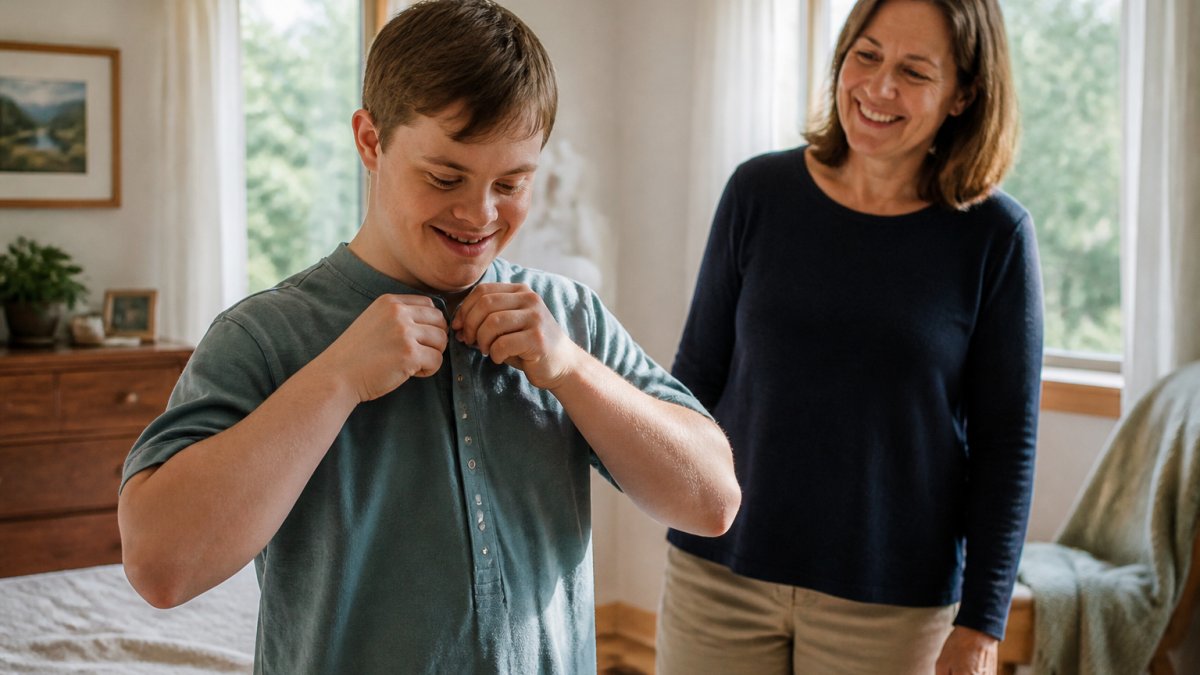
Features like large, easy-to-manipulate fasteners, clear access points, and intuitive construction allow individuals to develop real competence. This isn't just about practicality, it's about self-determination and the genuine pride that comes from managing one's own body and appearance. Families who prioritize adaptive apparel often notice increased confidence that extends into other daily activities.
The psychological impact of wearing clothing that fits properly and feels comfortable cannot be overstated. When sensory sensitivities are accommodated and mobility limitations are addressed through thoughtful design, individuals with special needs can relax and focus on being present. They're not fighting their clothing; they're living their lives.
Caregiver-Focused Ergonomic Dressing Solutions
Caregiving is physically and emotionally demanding. Ergonomic adaptive apparel considers caregiver reach, strength, and time constraints.
Side-openings and accessible fastening systems reduce awkward reaching and twisting performed dozens of times daily. Reinforced seams and quality construction extend garment life, reducing replacement frequency and financial burden. Thoughtful design acknowledges that caregivers need efficient solutions without compromising the dignity or comfort of the person they're supporting.
How to Choose Meaningful Gifts for Families
Selecting gifts for families with special needs members requires understanding their actual daily challenges. Apparel gifts work best when addressing specific identified needs, sensory sensitivity, mobility limitations, or managing multiple outfit changes.
Understanding the Family's Real Needs
Before purchasing adaptive clothing, ask about:
- Mobility: Does the person use a wheelchair or walker? Limited shoulder mobility?
- Sensory sensitivities: Problematic fabric textures, tags, or seams? Temperature regulation challenges?
- Dressing barriers: What creates the most difficulty, fasteners, overhead dressing, or something else?
- Incontinence management: Need frequent access for diaper changes?
- Activity level: Quiet indoor, school, or active play?
- Existing solutions: What adaptive clothing has the family tried? What worked?
This information transforms gift-giving into genuine support.
Budget-Conscious Alternatives: DIY Adaptive Modifications
Adaptive clothing costs 30-50% more than standard apparel due to custom construction. For budget-conscious families, modifying existing clothing offers a practical alternative.
Converting button closures to magnetic fasteners: Magnetic snap kits ($10-20) replace traditional buttons with hidden magnets. Remove the button, install magnets on opposite sides, and hand-sew.
Adding side-openings to existing shirts: A side-seam modification creates an opening fastened with velcro or snaps. A seamstress can add this for $15-30, preserving familiar feel while improving accessibility for sensory-sensitive individuals.
Removing and relocating tags: Standard care tags sewn into necklines can be carefully removed and replaced with printed labels or relocated to side seams.
Shortening back panels on wheelchair-friendly modifications: For individuals using wheelchairs, a tailor can shorten the back panel of a standard shirt by 2-4 inches, eliminating bunching without requiring complete reconstruction.
Seam flattening and tag removal for sensory comfort: A seamstress experienced with sensory-friendly construction can flatten seams, remove irritating labels, and adjust fit to reduce pressure points on existing garments.
These modifications work best when families have basic sewing skills or access to a local tailor.
Selecting Quality Adaptive Apparel as Gifts
When purchasing new adaptive clothing, quality matters more than quantity. One well-constructed adaptive shirt that genuinely solves a dressing problem is worth far more than several standard items that create frustration.
Evaluate construction quality: Look for reinforced seams, double-stitching in high-stress areas, and durable fabric that will withstand frequent washing. For wheelchair users, check that seams in contact zones are particularly robust.
Match fastener type to the individual's abilities: Magnetic closures work best for individuals with minimal fine motor control. Snaps suit those with moderate coordination. Velcro works for active individuals but may be problematic for sensory-sensitive people. Ask families which fastening system they've found most successful.
Consider seasonal needs: A sensory-friendly base layer for winter or a lightweight, breathable shirt for summer addresses a specific, practical need. Seasonal gifts show thoughtfulness about the family's actual challenges throughout the year.
Prioritize fit and comfort over style: Standard sizing often doesn't account for the body shapes and positioning needs of individuals with special needs. Adaptive brands typically offer detailed fit guidance and customer service support to ensure proper sizing. This attention to fit is what makes adaptive clothing genuinely functional rather than just stylistically different.
Asking Directly and Respecting Expertise
Parents and caregivers know exactly what features would improve their daily routines. A gift that addresses those identified needs shows genuine care and support. Rather than assuming, ask directly: "What would make dressing easier?" or "Is there a specific adaptive feature that would help?"
Families appreciate gifts that demonstrate understanding of their real situation, not generic presents that ignore their specific circumstances. This direct approach also prevents the common mistake of purchasing items the family has already tried and found unhelpful.
Charitable Impact Shopping Guide for Mission-Driven Apparel
When families purchase adaptive clothing and other apparel, they can choose brands that direct profits toward causes that matter. Mission-driven companies use retail sales to support organizations working in Down Syndrome awareness, disability advocacy, and community support.
Love Revolt Clothing exemplifies this approach. Each purchase supports charitable initiatives including Down Syndrome awareness programs and organizations like GiGi's Playhouse, which provides programs and support for individuals with Down Syndrome and their families. The brand's veteran ownership and commitment to global humanitarian work, including building schools, churches, and water wells in Africa, adds another dimension of impact.
Choosing apparel from mission-driven brands means families can address their own clothing needs while simultaneously supporting causes they care about. This alignment of personal need with charitable impact creates a sense of purpose around everyday purchases. Families know their money is supporting real change in their communities and beyond. mission-driven companies like Love Revolt Clothing.
Frequently Asked Questions
What features should I look for in adaptive clothing for individuals with special needs?
Prioritize easy-access fastening systems like magnetic closures or velcro alternatives that reduce the time and frustration of dressing. Look for sensory-friendly fabrics that are soft, seam-free, or minimal-seam designs to avoid tactile sensitivity issues. Wheelchair-friendly designs with side-openings, zip-on sleeves, and ergonomic cuts ensure comfort during daily activities. Quality construction that withstands frequent washing and maintains its shape supports long-term wear and dignity.
How do adaptive clothing benefits improve quality of life for families?
Adaptive clothing reduces dressing time significantly, which eases caregiver burden and gives individuals more independence. Sensory-friendly fabrics minimize discomfort and anxiety related to tactile sensitivity, improving mood and behavior. Functional design elements like easy incontinence management access preserve dignity during personal care. Families report less daily stress and more time for meaningful activities when dressing becomes simpler and less conflict-driven.
How can I verify that my clothing purchase actually supports charitable causes?
Ask the brand directly where donations go and request transparency reports showing charitable contributions. Mission-driven apparel companies like Love Revolt Clothing publish their impact through partnerships with organizations like GiGi's Playhouse and clear statements about how proceeds support Down Syndrome awareness, schools, churches, and clean water initiatives. Check their website for specific impact stories and verified partnerships before purchasing.
What makes mission-driven apparel different from regular clothing brands?
Mission-driven brands embed charitable giving into every purchase, meaning your money directly supports causes like Down Syndrome awareness and community initiatives. These companies prioritize comfort and quality alongside purpose, offering designs that reflect family values and inclusive sizing. The intentional connection between your purchase and real-world impact creates meaning beyond the garment itself, aligning your wardrobe with your values.