

Are Christian Clothing Brands Worth the Price? 2026 Guide
Posted by Editorial Team on on 20th Oct 2026
Table of Contents
- What Makes Christian Clothing Brands Cost More
- Best Christian Clothing Brands and Their Value Proposition
- Affordable Christian Clothing Brands Without Sacrificing Quality
- Ethical Christian Clothing Brands: Production and Sourcing Standards
- Christian Clothing Brands That Give Back: Measuring Real Impact
- How to Evaluate Whether a Christian Brand Is Worth Your Money
- The Verdict: Is Paying Premium Prices for Christian Apparel Justified
- Frequently Asked Questions
Last Updated: October 20, 2026
What Makes Christian Clothing Brands Cost More
Compared to a mainstream retailer, a Christian apparel brand can feel substantially pricier, which raises the question: are christian clothing brands worth the price? The gap isn't arbitrary: mission-driven brands invest in specific areas that directly impact what you pay at checkout.
At Love Revolt Clothing, we focus on the materials, how designs hold up over time, and where the profits go.
Fabric Quality and Durability Standards
Premium Christian clothing brands source fabrics engineered to last through repeated washing and wearing, not just a season or two.
Higher-quality cotton blends resist fading, shrinking, and pilling. Heavier-weight fabrics feel substantial and hold their shape longer, staying fresh after 50+ washes instead of 10.
Durability translates to cost per wear: a $40 shirt lasting two years costs less per wearing than a $15 shirt that falls apart in six months. Faith-based brands know customers want apparel that reflects their values for years, not weeks.
Print Quality and Design Longevity
Washing, drying, and regular wear break down lower-quality prints, and budget brands often use screen printing that cracks and fades after a handful of washes.
Mission-driven brands invest in print technology that bonds ink to fabric at a molecular level. Direct-to-garment printing, premium screen printing with proper curing, and advanced heat-transfer methods cost more but preserve the message, the whole point of faith-inspired clothing.
When you express your faith through a graphic, you want that statement to stay clear and intact. Cheap prints undermine that purpose within weeks.
The Charitable Giving Component
Some of what you pay goes toward the mission, not just the shirt. Brands like Love Revolt Clothing that support causes, building schools and churches, drilling water wells in Africa, raising Down Syndrome awareness, factor those commitments into pricing.
It's a deliberate choice, not hidden markup: you're funding charitable initiatives. Whether that premium is worth it depends on how much you value the cause and how transparent the brand is about where donations go.
Best Christian Clothing Brands and Their Value Proposition
The Christian apparel market now spans many price points, design philosophies, and charitable focuses. Understanding what each type offers helps you decide if the premium aligns with your priorities.
Mission-Driven Brands That Deliver Impact
Love Revolt Clothing stands out for combining three elements: quality urban military design, transparent charitable giving, and family-focused values. Every purchase directly supports global humanitarian efforts, schools, churches, water wells in Africa, and Down Syndrome awareness through partnerships like GiGi's Playhouse.
What differentiates mission-driven brands is accountability: the best publish where donations go, track impact, and embed charity in their business model rather than using it as marketing theater.
Style Options: From Minimalist to Bold Faith Designs
Not every Christian wants a large scripture verse across the chest. Today's design diversity lets you choose apparel matching your personal style and how openly you want to express faith.
Minimalist designs use subtle symbols, small text, or understated graphics, appealing to professionals and people who prefer faith expression to be personal rather than public. They cost the same as bold designs but offer different utility.
Bold faith designs feature prominent scripture and unmissable messaging, working for people active in church communities, youth groups, or those who want to spark conversations about their beliefs.
The best Christian apparel brands now offer both. Love Revolt Clothing's urban military design aesthetic offers clear faith messaging, appealing to people who want style alongside substance.
Affordable Christian Clothing Brands Without Sacrificing Quality
You don't have to spend premium prices to get quality Christian apparel; accessible pricing and ethical practices aren't mutually exclusive.
The key is identifying which corners brands cut. Some use lower-cost manufacturing without compromising garment quality; others limit design variety or charitable scope to keep prices down. Neither is wrong, it depends on your priorities.
Look for transparent information about materials, manufacturing location, and print methods. A $25 Christian t-shirt from a brand that publishes its supply chain and uses quality fabrics often outperforms a $40 shirt with vague sourcing.
Ethical Christian Clothing Brands: Production and Sourcing Standards
The ethics of Christian apparel extend beyond the printed message; how and where garments are made matters to conscious consumers.
Manufacturing Transparency and Labor Practices
Ethical Christian brands disclose manufacturing locations and labor standards, whether producing domestically in the United States or overseas with strict labor certifications and regular facility audits.
Love Revolt Clothing's veteran-owned status reflects a commitment to community values. Brands prioritizing ethical labor practices highlight this publicly because it's part of their identity, not an afterthought.
When evaluating manufacturing transparency, look for specifics: which countries, which facilities, what certifications. Generic "ethical production" statements mean little; specificity signals genuine commitment.
Material Sourcing and Environmental Responsibility
Where fabric comes from and how it's produced affects both quality and environmental impact. Organic cotton, recycled polyester blends, and sustainably sourced materials cost more but align with values many Christian consumers hold.
Some brands use conventional cotton treated with pesticides and dyes that harm water systems, problematic for brands supporting clean water initiatives globally. The contradiction undermines their mission.
The best ethical Christian apparel brands audit their supply chains and can explain their material choices. If a brand can't answer questions about where cotton is sourced or how dyes are processed, that's a red flag.
Christian Clothing Brands That Give Back: Measuring Real Impact
Charitable giving claims are easy to make. Measuring actual impact is harder. The best Christian apparel brands prove their commitments through documentation, partnerships, and transparent reporting.
Verified Charitable Initiatives and Transparency
Love Revolt Clothing partners with established organizations like GiGi's Playhouse and supports verified initiatives, building schools, drilling water wells, supporting Down Syndrome awareness. These aren't vague promises. They're specific, measurable commitments with documented outcomes.
When evaluating a Christian brand's charitable claims, ask for evidence. Which organizations do they partner with? Can you verify those partnerships independently? Do they publish annual impact reports? Do they disclose what percentage of revenue goes to charity versus operations?
Brands that publish this information openly typically donate more meaningfully than those that keep it private. Transparency builds trust and accountability.
Cost Per Wear: Does the Charity Premium Justify the Price
Here's the calculation that matters: Does paying more for a Christian apparel brand actually fund more charitable work, or does it mostly fund higher profit margins?
A $40 shirt that lasts two years costs $20 per year or roughly $0.11 per wear (assuming 180 wears annually).
Compare that to a $20 mainstream shirt lasting one year. Cost per wear is roughly $0.11, but $0 goes to charity.
The math shows that buying durable Christian apparel from mission-driven brands often costs less per wear than buying cheap mainstream alternatives, AND you fund charitable work.
However, if a Christian brand charges $50 but only donates $2 to charity while maintaining 50% profit margins, the premium isn't justified by impact.
How to Evaluate Whether a Christian Brand Is Worth Your Money
The decision to pay premium prices for Christian apparel comes down to specific, measurable factors. You can evaluate any brand objectively using these criteria.
Quality Checks: Fabric, Construction, and Print Durability
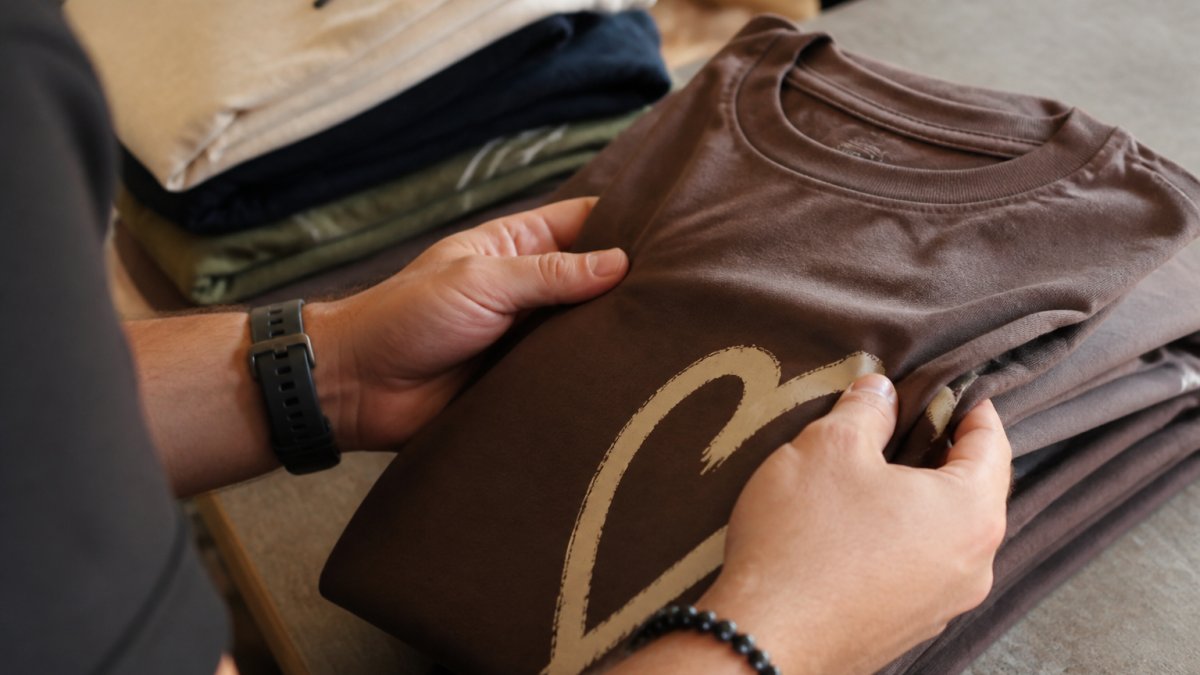
Before buying, inspect the garment in person or request detailed photos. Feel the fabric weight. Check the seams. Look at the hem. Quality construction uses reinforced stitching at stress points like armholes and necklines.
For prints, examine the edges. Quality prints have clean borders without bleeding or fraying. Run your finger across the graphic. It should feel like part of the fabric, not a layer sitting on top.
Check the tag. Quality brands identify their fabric composition clearly (100% cotton, cotton-poly blend, etc.) and often list manufacturing details. Vague tags suggest the brand isn't confident in its sourcing.
Return Policies and Customer Reviews as Value Indicators
Customer reviews on independent sites (not just the brand's website) provide real-world data about durability and fit. Look for patterns. If multiple reviews mention shrinking, fading prints, or poor fit, that's evidence. If reviews consistently praise quality and longevity, that's also evidence.
Pay attention to negative reviews that the brand responds to. How they handle complaints reveals their values. Dismissive responses suggest they don't prioritize customer experience. Thoughtful responses with solutions indicate they stand behind their products.
Comparing Faith-Based Apparel to Mainstream Clothing
The honest comparison: A quality Christian apparel brand versus a quality mainstream brand of similar price.
Both should use quality fabrics, quality construction, and quality prints. The difference is the message and the mission. You're not paying more for better fabric, you're paying for the design, the values it represents, and often the charitable component.
If a Christian apparel brand costs significantly more than mainstream equivalents but doesn't offer better quality, you're paying for branding and mission. That's a valid choice if you prioritize the cause, but be clear about what you're actually buying.
The best Christian apparel brands offer quality comparable to premium mainstream brands at similar price points, PLUS the added value of supporting causes you believe in.
| Evaluation Factor | What to Look For | Red Flag |
|---|---|---|
| Fabric Quality | Specified composition, substantial weight, appropriate for climate | Vague fabric description, paper-thin material |
| Construction | Double-stitched seams, reinforced stress points, clean hems | Single-stitched seams, loose threads, unfinished edges |
| Print Quality | Clean edges, graphic feels bonded to fabric, consistent color | Bleeding ink, graphic peeling, faded color on new shirt |
| Transparency | Specific manufacturing location, charitable partnerships documented | Vague sourcing, no verifiable charity claims |
| Return Policy | Accepts returns on worn items, clear conditions | Final sale only, no questions answered |
| Customer Reviews | Consistent praise for durability and fit, brand responds to issues | Complaints about shrinking/fading, dismissive brand responses |
The Verdict: Is Paying Premium Prices for Christian Apparel Justified
So are christian clothing brands worth the price? The answer depends on what you're actually buying.
If you're comparing a premium Christian brand to another quality mainstream brand at similar price, the premium reflects design and mission, not material superiority.
If you're comparing a premium Christian brand to another Christian brand, the decision hinges on transparency and impact. Which brand actually delivers on its charitable promises?
The worst decision is paying premium prices for a Christian apparel brand that cuts corners on quality, hides its manufacturing, or makes vague charitable claims.
Choosing Christian apparel that aligns with your values doesn't require overpaying.
Frequently Asked Questions
Are Christian clothing brands worth the price compared to regular apparel?
The value depends on what matters most to you. Christian clothing brands typically cost more due to higher-quality fabrics, durable print techniques, and charitable giving components. If you prioritize faith expression, community impact, and garment longevity, the premium often justifies itself. However, if price is your only concern, mainstream retailers offer cheaper alternatives. The real question is whether the combination of quality, design, and charitable mission aligns with your values and budget.
How much of my purchase actually goes to charity from Christian clothing brands that give back?
This varies significantly by brand. Some Christian clothing brands that give back allocate 5-10% of sales to charitable causes, while others may contribute different amounts depending on product type or campaign. Before purchasing, look for brands that publicly disclose their donation structure and partner organizations. Reputable brands often publish annual impact reports or donation breakdowns on their website. Ask directly if this information isn't readily available, transparency is a sign of genuine commitment.
What should I look for to tell if a Christian clothing brand offers good quality?
Examine fabric weight and material composition, quality Christian apparel typically uses heavier cotton blends that resist shrinking and pilling. Check print quality by reading customer reviews about fade resistance after multiple washes. Look at construction details. Review return policies and warranty information; brands confident in durability usually offer generous returns. Finally, compare customer reviews on independent sites to see real-world durability reports rather than relying solely on brand claims.
Are affordable Christian clothing brands lower quality than premium options?
Not necessarily. Some affordable Christian clothing brands deliver solid quality by streamlining design complexity or reducing overhead costs. However, price often correlates with fabric durability, print longevity, and ethical manufacturing practices. Affordable options may use thinner fabrics or basic print methods that fade faster. The key is checking individual brand specifications and customer reviews rather than assuming price equals quality. Many budget-friendly faith-based brands still meet basic durability standards for everyday wear.