

How to Choose a Coyote Brown T-Shirt That Meets AR 670-1
Posted by Editorial Team on on 31st Oct 2026
Last Updated: November 1, 2026
Quick Summary
A coyote brown t-shirt is a dark, earthy tan with a slight olive undertone, close to but not identical with Tan 499. To meet AR 670-1, confirm the named shade matches your uniform spec, avoid visible logos, and choose a flat ribbed crew neck.
- Coyote brown is darker and more olive-toned than Tan 499, so the two shades are not interchangeable.
- Check that the listing names the specific shade rather than a generic brown before trusting a compliance claim.
- Avoid printed logos on the chest or sleeves, since they can show above or below the uniform.
- Choose a ribbed crew-neck collar that sits flat under the uniform collar, not a V-neck or oversized collar.
- Keep one verified compliant shirt for uniform days and use other shirts for off-duty wear.
Table of Contents
- What AR 670-1 Requires for an Undershirt
- Cotton, Polyester and Blend Fabrics Compared
- Quick-Dry and Moisture-Wicking Performance Trade-Offs
- Side-by-Side Comparison of Five Popular Options
- Fit, Sizing and Durability Tips Before You Order
- Ordering a Custom Coyote Brown T-Shirt for Your Unit or Group
- Frequently Asked Questions
Choosing a coyote brown t-shirt sounds simple until you start reading product listings. This guide helps you sort the real differences from the marketing. The short answer: coyote brown is a specific shade in the uniform color family, and it is close to, but not identical with, Tan 499. Getting the shade right matters because it decides whether an undershirt fits the uniform you wear.
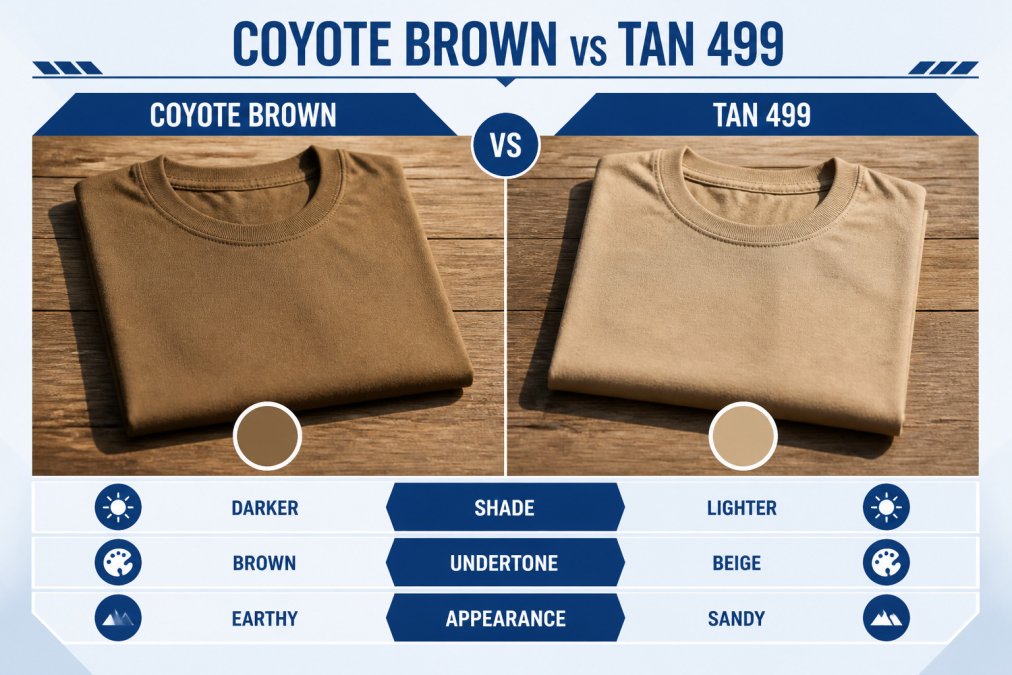
Coyote brown is a dark, earthy tan with a slight olive undertone. Tan 499 is a lighter, more yellow-leaning shade. In practice, a coyote brown shirt looks noticeably darker against a tan uniform than a Tan 499 shirt does. Many buyers put them side by side for the first time and are surprised by the gap.
A common mistake is assuming the two names are interchangeable because they appear on the same product pages. They are not. Check the color name in the listing, then compare it with the uniform spec your unit uses before you buy.
What AR 670-1 Requires for an Undershirt
AR 670-1 is the Army regulation that governs how soldiers wear the uniform, including the color and wear of undergarments that show at the neckline or sleeves. Read the current version directly from the Army Publishing Directorate AR 670-1 regulation before ordering, since specific requirements can change.
Most buyers focus on color, but the regulation also addresses how the undershirt is worn. The shirt should not show beyond the authorized uniform components. Check whether your unit has additional local guidance, because commanders can set stricter standards than the regulation itself.
What "AR 670-1 Compliant" Actually Means on a Product Page
A listing that says "AR 670-1 compliant" is making a claim about color and construction, not a guarantee that the shirt is authorized for your specific uniform. Compliance generally means the shirt is offered in an approved shade and is cut as a plain crew-neck undershirt without visible logos, contrast stitching, or decorative trim that would show above the collar or below the sleeve. Confirm the exact requirements for your uniform with your unit.
Three things to verify before you trust the label:
- Shade name, not just "brown." The listing should name the specific color (coyote brown, Tan 499, or sand) rather than a generic brown. If the shade is unnamed, treat the compliance claim as unverified.
- No visible branding. A small tag inside the collar is fine; a printed logo on the chest or sleeve is not, because it can show through or above the uniform.
- Crew neck with a low-profile collar. A ribbed crew collar that sits flat under the uniform collar is the standard pattern. V-necks and oversized collars are more likely to show.
How the Services Differ
The Army's AR 670-1 is the regulation most buyers search for, but it is not the only one. Other services have their own uniform rules, so confirm the requirement for each service. A shirt marketed as compliant with one service's regulation is not automatically compliant with another. If you wear a joint-service uniform or are buying for a mixed group, confirm the requirement for each service rather than assuming one shirt covers everyone.
Uniform Compatibility With OCP and Multicam
The Operational Camouflage Pattern (OCP) and Multicam uniforms each pair with undershirts in specific colors. Coyote brown is commonly chosen to match the earth tones in these patterns, but the match depends on the exact uniform issued to you.
Before buying, confirm which pattern and which shade your unit wears. Lay the shirt next to a sleeve of your uniform in natural light. Colors that look identical under store lighting can differ outdoors.
When a Shirt Is "Close Enough" and When It Is Not
For everyday wear, a shirt that is slightly off-shade is usually fine. For inspection, formation, or any setting where the undershirt is visible, the shade and cut need to match the uniform spec closely. The practical rule most soldiers follow is to keep one verified, regulation-compliant shirt for uniform days and use less expensive or more comfortable shirts for off-duty wear. That split avoids ruining a compliant shirt with repeated washing while still keeping a known-good option on hand.
Cotton, Polyester and Blend Fabrics Compared
Fabric content changes how an undershirt feels, dries and wears over time. Cotton is soft and breathable but holds moisture and dries slowly. Polyester dries quickly and resists shrinking, but can feel less comfortable against the skin. Cotton-polyester blends try to balance the two.
Blends such as a 50/50 mix are a common middle ground for field use. You can also browse the Military Green Frost tri-blend t-shirt, which uses the same fabric family as the other options here.
The Three Fabric Families, Side by Side
| Fabric | Typical Content | Dries | Feels | Shrinks | Best For |
|---|---|---|---|---|---|
| 100% cotton | All cotton, often 5.4 oz jersey | Slowly, holds sweat against skin | Soft, familiar, breaks in well | Noticeably unless pre-shrunk | Off-duty wear, cool climates, buyers who dislike synthetic feel |
| 100% polyester | All synthetic, often lightweight knit | Fast, wicks and evaporates quickly | Slicker, cooler against skin | Minimal | Hot conditions, high-sweat activity, travel where laundry is limited |
| Cotton-poly blend | Commonly 50/50 or 60/40 | Moderate, faster than cotton, slower than polyester | Middle ground; softer than pure polyester | Less than cotton | Field use, everyday wear, buyers who want one shirt for both |
What the Fiber Percentages Actually Change
- Moisture handling. Cotton absorbs sweat and holds it, which is why a wet cotton shirt stays damp and heavy. Polyester moves moisture to the surface where it evaporates, so it feels drier sooner. A 50/50 blend splits the difference: it wicks better than cotton but does not dry as fast as pure polyester.
- Odor. Polyester is the fabric most likely to hold odor because oils and bacteria cling to synthetic fibers. Cotton releases odor more readily in the wash. If you wear a shirt for multiple days between washes, a blend or cotton is usually the more forgiving choice.
- Durability. Polyester resists abrasion and shrinking better than cotton. Cotton can pill and thin over repeated washing, especially at the collar. Blends tend to hold their shape longer than pure cotton while feeling softer than pure polyester.
- Comfort in heat. In dry heat, polyester's quick dry is a real advantage. In humid heat, a cotton or blend shirt often feels less clammy because it does not sit as slick against damp skin. There is no single winner, the right pick depends on your climate and how much you sweat.
- Shrinkage and fit. Pre-shrunk cotton holds its size better than untreated cotton, but expect some movement after the first few washes. Polyester and blends shrink less, so if you are between sizes, a blend is the safer order.
How to Choose by Use Case
- Uniform days and inspections: pick a verified compliant shirt in the shade your uniform requires, then choose the fabric based on climate. A blend is the most common all-purpose pick.
- Hot, dry field conditions: pure polyester or a high-synthetic blend dries fastest and stays lightest when wet.
- Everyday off-duty wear: 100% cotton is the most comfortable for most people and the easiest to wash without special care.
- Multi-day wear without laundry: a cotton-poly blend manages odor and moisture better than either extreme.
Quick-Dry and Moisture-Wicking Performance Trade-Offs
Quick-dry shirts pull sweat away from the skin and evaporate it faster. That helps in hot conditions and during long days of physical work. The trade-off is that the most performance-focused fabrics can feel slicker and less cozy than plain cotton.
Side-by-Side Comparison of Five Popular Options
| Product | Fabric | Key Feature | Starting Price (USD) | Best For |
|---|---|---|---|---|
| Bunker 27 Coyote Brown 3-Pack | Not specified | AR 670-1 and AFI 36-2903 compliant, pre-shrunk | Contact for pricing | Regulation-compliant OCP undershirts |
| Rothco AR 670-1 Coyote Brown | Performance blend | Quick-dry, fade-resistant | $15.99 | Field moisture control |
| Kellac Core Cotton Tee | 100% cotton, 5.4 oz | Classic silhouette, officially licensed | Contact for pricing | Traditional cotton feel |
| Flying Cross Duke 50/50 3-Pack | Cotton-polyester blend | Breathable, 3-pack value | $29.99 | Blend comfort and value |
| Love Revolt Clothing | Comfort-focused fabrics | Mission-driven, veteran-owned | Contact for current pricing | Everyday wear with a purpose |
Pricing depends on quantity and current availability, so check the listing for the latest figures.
Fit, Sizing and Durability Tips Before You Order
Undershirts should fit close without restricting movement. Look for a crew neck with a neat ribbed collar that stays flat under the uniform collar. Compare each brand's size chart against your current undershirt, since sizing varies between manufacturers.
Wash in cold water and air dry when possible to extend the life of any shirt, regardless of fabric.
Ordering a Custom Coyote Brown T-Shirt for Your Unit or Group
Pricing depends on quantity, print placement, delivery date and shipping, so request a quote with your specifications. Contact Love Revolt Clothing directly to discuss group orders and current pricing.
Before committing to a large order, check how the business supports its charitable commitments. Guidance on verifying charitable impact claims explains how consumers can evaluate charity-linked marketing. Love Revolt Clothing's own guide on 5 Ways to Verify Charitable Impact of Clothing Brands walks through the questions to ask.
Reach out to contact Love Revolt Clothing with your unit size, color requirement and delivery deadline to get started.
Frequently Asked Questions
What color is coyote brown?
Coyote brown is a muted, medium-dark khaki brown used on U.S. military undershirts and uniform layers. It sits darker and more olive-leaning than a lighter, more yellow shade. Because dye lots vary between manufacturers, compare a fabric swatch or product photo in person when color match matters for your unit or group.
Is coyote brown the same as tan 499?
No. Tan 499 is generally a lighter, sandier shade, while coyote brown is darker. Check the product listing for the exact color name before you buy, since a mismatch can be obvious next to other uniform pieces.
What is an AR 670-1 coyote brown T-shirt?
An AR 670-1 coyote brown T-shirt is an undershirt in coyote brown designed to meet the color and wear standards in Army Regulation 670-1, which governs uniform and insignia wear for the U.S. Army. Confirm the exact regulation text and current uniform guidance with your unit before purchasing, as requirements can change.
Can you customize a coyote brown T-shirt?
Pricing for group orders depends on quantity, print placement and delivery timing, so request a quote from Love Revolt Clothing's website before planning a group order.
