

How to Build a Minimalist Christian Wardrobe?
Posted by Editorial Team on on 24th Oct 2026
Last Updated: October 25, 2026
Quick Summary
A minimalist Christian wardrobe is a small, intentional collection of 30-50 coordinated pieces that reflect your faith values through thoughtful choices about stewardship, modesty, and contentment. Build yours by decluttering first, selecting neutral colors and quality core layers, then adding versatile basics that mix and match easily to create dozens of outfits.
- Start by decluttering: sort everything into keep, donate, and discard piles based on wear, fit, values alignment, and versatility.
- A complete fall/winter capsule includes 8 tops, 5 bottoms, 5 layers, 2 outerwear pieces, 4 shoes, 6 accessories, and 6 sleep/loungewear items.
- Use a faith-based framework: evaluate each piece for stewardship, contentment, service, and personal conviction before buying.
- Choose neutral colors like black, white, gray, navy, and cream so every top matches every bottom without clashing.
- Ten sample outfits from the 36-item capsule show how fewer pieces create multiple combinations through strategic layering and mixing.
Table of Contents
- What Minimalism Means for Your Christian Wardrobe
- How to Declutter Clothes with Intention
- Building a Christian Capsule Wardrobe
- Choosing Modest Christian Clothing That Works
- Creating Christian Outfit Ideas from Fewer Pieces
- Selecting a Neutral Color Palette and Core Layers
- Start Your Minimalist Wardrobe Today
- Frequently Asked Questions
What Minimalism Means for Your Christian Wardrobe
Minimalism is about owning fewer items on purpose.
It's about intentional living. You choose each piece because it aligns with your values, not because it was on sale.
Many people think minimalism means boring clothes. That's not true. A minimalist Christian wardrobe can be stylish, comfortable, and expressive.
The real benefit? You get dressed faster. You feel more confident. You spend less money.
How to Declutter Clothes with Intention
Start by taking everything out of your closet. Yes, everything.
Now sort into three piles:
- Keep (things you love and wear regularly)
- Donate (items in good shape you don't wear)
- Discard (things too worn to donate)
For each piece, ask yourself these questions:
- Do I wear this regularly?
- Does it fit my body right now?
- Does it match my values?
If you answer "no" to any question, it goes. This isn't about being harsh.
Watch out: Don't keep clothes "just in case." That "someday" outfit takes up space and creates guilt.
Many people keep clothes from old jobs or past versions of themselves. That's normal.
Consider donating to organizations that support community needs. Your clothes can help others while clearing your space.
Building a Christian Capsule Wardrobe
A Christian capsule wardrobe is a small, coordinated collection of pieces that mix and match easily while reflecting your values. Most people land on 30-50 items total, including shoes and accessories.
What makes it Christian isn't a dress code. It's the intent behind it: stewardship of money and time, contentment with enough, and a closet that supports hospitality, service, and worship without becoming a source of stress or vanity.
A Complete Sample Capsule (Fall/Winter, 36 Items)
Here is a full example you can adapt. Adjust counts for your climate, occupation, and life stage.
Tops (8)
- 3 plain t-shirts (white, gray, black)
- 2 long-sleeve shirts (cream, navy)
- 2 button-ups (white oxford, chambray)
Bottoms (5)
- Dark straight-leg jeans
- Black trousers
- Olive chinos
Layers (5)
- Gray cardigan
- Navy blazer
- Cream crewneck sweater
Outerwear (2)
- Wool coat (camel or black)
- Packable rain shell
Shoes (4)
- White sneakers
- Black loafers
- Brown ankle boots
Accessories (6)
- Leather belt (brown)
- Leather belt (black)
- Simple necklace
Sleep/loungewear (6), often left out of capsule counts, but worth planning so you don't borrow from your daytime pieces.
That's 36 items. Swap the wool coat for a lighter jacket and the boots for sandals and the same framework works for spring/summer.
Repeatable Outfit Combinations
The point of a capsule is that pieces combine without thought. Here are ten outfits from the list above:
- White tee + dark jeans + white sneakers + tote
- Cream long-sleeve + black trousers + loafers + necklace
- Chambray button-up + olive chinos + ankle boots
- Black turtleneck + midi skirt + loafers + scarf
- Gray cardigan + white tee + black trousers + flats
- Navy blazer + white oxford + dark jeans + loafers
- Cream sweater + olive chinos + sneakers
- Denim jacket + white tee + midi skirt + ankle boots
- Wrap dress + cardigan + flats + necklace
- Wool coat + turtleneck + trousers + boots
Ten outfits from 36 items is conservative. Most people find 30+ combinations once they start mixing.
A Faith-Based Decision Framework
Before adding a piece, run it through four questions:
- Stewardship: Does this fit my budget without displacing giving or savings?
- Contentment: Am I buying because I need it, or because I'm chasing a feeling?
- Service: Can I move, work, serve, and worship in this comfortably?
If a piece fails any question, leave it. This is the practical link between faith and closet decisions that most capsule guides skip.
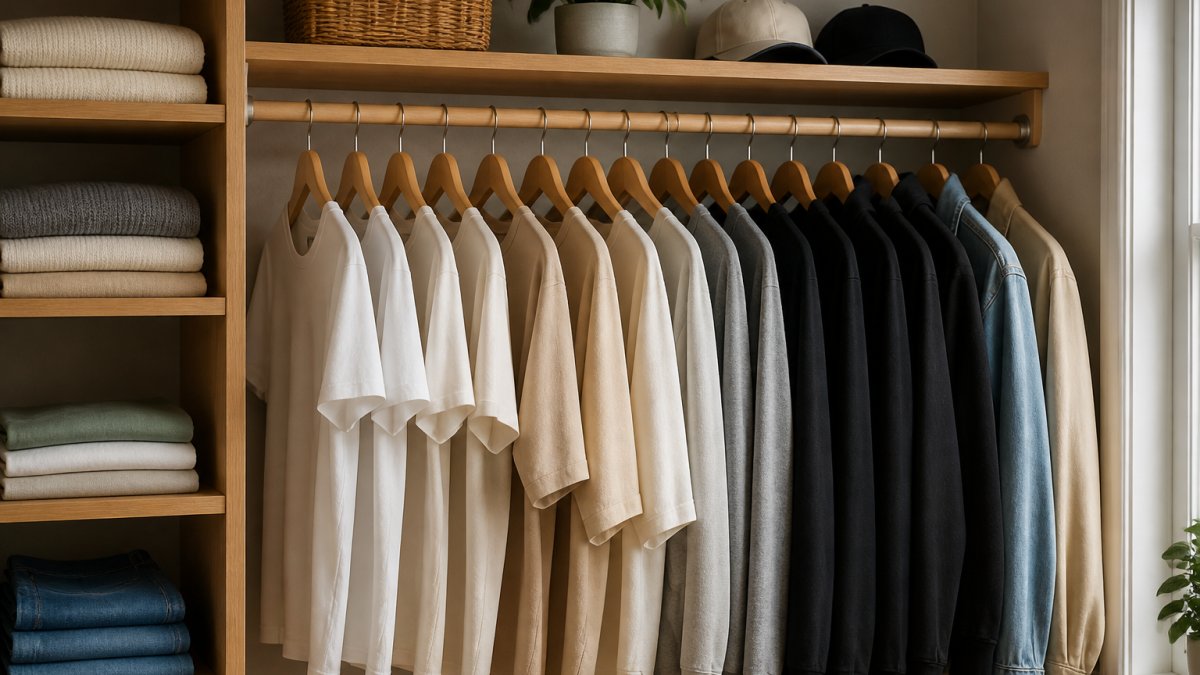
At Love Revolt Clothing, we believe a capsule wardrobe should reflect your faith and values. Choose pieces that make you feel confident and aligned with who you are.
A complete fall/winter capsule wardrobe typically includes 30-50 coordinated pieces that mix and match easily.
| Category | Item Count | Examples |
|---|---|---|
| Tops | 8 | Plain t-shirts, long-sleeve shirts, button-ups, turtleneck |
| Bottoms | 5 | Jeans, trousers, chinos, midi skirt, dress |
| Layers | 5 | Cardigan, blazer, sweater, jackets |
| Outerwear | 2 | Wool coat, rain shell |
| Shoes | 4 | Sneakers, loafers, ankle boots, flats |
| Accessories | 6 | Belts, necklace, scarf, watch, tote |
| Sleep/loungewear | 6 | Comfortable pieces for rest and home |
| Total | 36 | Adjustable for climate and life stage |
Choosing Modest Christian Clothing That Works
Modest Christian clothing is not one look. Scripture doesn't prescribe a hemline or a neckline, and faithful Christians land in different places. The goal of this section is to help you form your own conviction and then shop in a way that honors it, not to hand you a rulebook.
Why Convictions Differ
Modesty conversations in Christian communities usually center on a few passages, 1 Timothy 2:9-10, 1 Peter 3:3-4, and Romans 14 on not passing judgment on disputable matters. Those texts emphasize humility, self-control, and not causing others to stumble, but they don't specify measurements. That's why traditions differ:
- Some communities emphasize coverage and loose fit as a matter of holiness.
- Others emphasize modesty as an attitude, avoiding ostentation, attention-seeking, or expense.
- Many emphasize personal conviction, with parents and church leaders guiding but not legislating.
A useful test: if you'd be uncomfortable explaining your choice to a mentor or to your congregation, that's worth examining. If your choice comes from genuine conviction and not from fear or people-pleasing, it's likely sound.
A Practical Framework for Your Own Convictions
Work through these questions once, write down your answers, and keep them where you'll see them when shopping:
- Coverage: What necklines, sleeve lengths, and hemlines do I want to wear consistently?
- Fit: How fitted is too fitted for me, at the bust, waist, hips, and legs?
- Context: Do my work, church, and social settings call for different standards?
Your answers become your personal standard. They don't need to match anyone else's.
What to Look For When Shopping
Once you know your standard, these features make modest pieces easier to find and wear:
- Fabric weight: Mid-weight knits and woven fabrics drape without clinging. Thin jersey and slinky synthetics show every line.
- Necklines: Crew, boat, and high scoop necklines offer coverage without looking severe. Deep V and off-shoulder require layering.
- Sleeves: Cap sleeves and short sleeves work for many; if you prefer more coverage, look for three-quarter or long sleeves, or plan to layer.
- Hemlines: Midi and maxi lengths give coverage and movement. If you prefer knee-length, check that the hem stays put when you sit.
Modesty Across Contexts and Life Stages
A single standard can flex with circumstances without becoming inconsistent:
- Work: Professional settings often call for more coverage and structure. A blazer and trousers solve most of it.
- Church: Follow the norms of your congregation, especially if you're visiting or new.
- Exercise and swimming: Modesty standards here are often different; choose swimwear and activewear that match your convictions and the setting.
- Pregnancy and postpartum: Fit changes fast. A few adjustable pieces and layers keep you comfortable without replacing your whole wardrobe.
When Modesty Becomes a Burden
Modesty is meant to support your faith, not create anxiety. If getting dressed feels like a test you're failing, step back.
Many modern brands now offer modern Christian apparel with subtle designs that express faith authentically that balance style with modesty.
Pay attention to how pieces make you feel. That feeling matters more than any rule. Your wardrobe should support your faith, not create stress.
Creating Christian Outfit Ideas from Fewer Pieces
This is where a capsule wardrobe becomes powerful.
Here's how:
Start with a base Pick jeans or neutral pants. Add a basic t-shirt or long-sleeve shirt.
Add a layer Throw on a cardigan, blazer, or sweater.
Choose shoes Sneakers make it casual. Professional shoes dress it up.
Add one accessory A simple necklace, scarf, or hat completes the outfit.
That's one outfit. Now swap one piece. Use different jeans.
The trick is choosing pieces that coordinate.
Keep a list of your favorite combinations.
Selecting a Neutral Color Palette and Core Layers
A neutral color palette is your foundation. Neutrals are colors that don't clash with anything. They include:
- Black
- White
- Gray
- Beige
Everything in your capsule wardrobe should be neutral or work with neutrals. This means every top matches every bottom.
You can add one or two accent colors if you want. Maybe a deep burgundy or forest green. But keep it minimal.
Core layers are the pieces you wear most often. These should be comfortable, versatile, and high quality:
- Basic t-shirts (long and short sleeve)
- Simple button-ups
- Plain sweaters or cardigans
Choose quality over quantity here. One good t-shirt lasts longer than three cheap ones.
Look for long sleeve pieces that serve as essential neutral-colored core layers for a minimalist wardrobe that you can wear year-round.
Your core layers should feel good on your body.
Start Your Minimalist Wardrobe Today
Building a minimalist Christian wardrobe takes time. You don't need to do it all at once. Start by decluttering what you have.
Here's your action plan:
- This week: Sort your closet. Remove items that don't serve you.
- Next week: Identify your neutral colors and core pieces.
- Month two: Fill gaps with versatile basics.
- Ongoing: Buy only pieces that work with what you already own.
As you build, remember why you're doing this. A minimalist wardrobe creates space, not just in your closet, but in your mind and life.
Your wardrobe should support your faith and your life. Every piece should earn its place through use and meaning.
Frequently Asked Questions
How do I start a minimalist Christian wardrobe from scratch?
Begin by decluttering your current closet, keeping only pieces that align with your values and fit well. Choose 5-7 neutral base colors (black, white, gray, navy, beige), then add 10-15 versatile pieces like plain t-shirts, simple sweaters, jeans, and neutral layers. Focus on quality basics that can mix and match easily. This foundation lets you build outfits intentionally rather than reaching for whatever is on top of the pile.
How many pieces should a minimalist Christian wardrobe have?
A functional minimalist wardrobe typically includes 25-40 pieces total, including shoes and accessories. This number varies based on climate and lifestyle, but the key is that every item serves a purpose and coordinates with others. Quality matters more than quantity. A smaller, well-chosen wardrobe encourages intentional living and reduces decision fatigue when you get dressed each morning.
How can you dress modestly while keeping a minimalist wardrobe?
Modest Christian clothing works naturally with minimalism because both emphasize simplicity and intentionality. Choose longer hemlines, higher necklines, and layered pieces as your core items. Invest in quality base layers, cardigans, and structured tops that provide coverage without bulk. A minimalist approach to modest dressing means fewer pieces that align with your personal convictions, making it easier to get dressed in a way that feels authentic to your faith.
How can you build a Christian capsule wardrobe on a budget?
Start by evaluating what you already own and building around existing pieces. Shop secondhand for quality basics and fill gaps gradually rather than all at once. Prioritize cost per wear: a $50 shirt worn 100 times costs 50 cents per wear, while a $20 shirt worn twice costs $10 per wear. Choose timeless pieces over trendy ones. Many faith-focused brands offer quality apparel that supports meaningful causes while helping you build a wardrobe aligned with your values.
Building a minimalist Christian wardrobe is an act of intentionality. It reflects your values and your faith. At Love Revolt Clothing, we create urban military design apparel with subtle faith-focused styles that support meaningful causes that fit into a thoughtful, minimalist approach to dressing. Start small, choose pieces that matter, and let your wardrobe tell your story.
