

Christian vs Secular Ethical Fashion: A 2026 Comparison
Posted by Editorial Team on on 12th Oct 2026
Table of Contents
- What Defines Ethical Fashion Brands
- The Role of Faith in Ethical Fashion
- Fair Labor and Worker Treatment Across Both Categories
- Environmental Responsibility and Sustainable Materials
- Sustainable Fashion Brand Transparency and Verification
- How to Shop Ethically for Clothes: A Decision Framework
- Key Differences and Trade-offs Worth Knowing
- Frequently Asked Questions
Last Updated: October 12, 2026
What Defines Ethical Fashion Brands
Ethical fashion brands commit to responsible practices across their supply chain, prioritizing fair labor, environmental sustainability, and transparency.
Ethical fashion rests on three pillars: people, planet, and accountability, living wages, worker rights, sustainable materials, and openness about where clothes are made.
What separates ethical fashion brands from typical retailers is commitment: mainstream brands make vague claims, while ethical brands invest in certifications, third-party audits, and supply chain transparency to prove theirs.
At Love Revolt Clothing, we believe ethical fashion goes beyond materials and labor, it extends to purpose.
The Role of Faith in Ethical Fashion
Faith shapes how some brands approach ethical fashion, from sourcing to charitable giving. Understanding this distinction helps you choose a brand that aligns with your beliefs.
What Makes a Brand Explicitly Christian
A Christian fashion brand integrates faith into its mission and operations beyond religious symbols, deciding based on stewardship, community care, and servant leadership.
Christian brands typically:
- State faith as a central business pillar
- Support faith-based charitable causes
- Operate with transparency rooted in accountability to God and community
Love Revolt Clothing was founded on spreading love through time, resources, and abilities. We support schools and churches in Africa, drill water wells, and champion Down Syndrome awareness, all rooted in faith-driven compassion.
Secular Ethical Brands and Their Foundations
Secular ethical brands prioritize similar values but ground them in environmental responsibility, social justice, and worker rights without religious motivation.
Secular ethical brands typically:
- Build missions around environmental protection or social equity
- Support secular nonprofits and social causes
- Make decisions based on sustainability science and labor ethics
Both categories share fair labor, sustainable materials, transparency, and genuine impact. The difference is motivation and cause allocation: a Christian brand might fund a church-building project, a secular brand climate research.
Fair Labor and Worker Treatment Across Both Categories
Fair labor practices define ethical fashion. Whether Christian or secular, ethical brands commit to worker welfare.
Ethical fashion brands ensure:
- Workers earn living wages that cover basic needs
- Safe working conditions with proper ventilation and equipment
- Limited working hours and reasonable overtime policies
The strongest go beyond minimums: long-term factory relationships, worker training, and detailed reports showing where clothes are made and by whom.
When evaluating labor practices, look for named factories, published audits, and garment traceability. Vague "ethical sourcing" claims mean little; real commitment shows in verifiable details.
Environmental Responsibility and Sustainable Materials
Environmental impact is where the Christian-versus-secular comparison gets interesting: both categories often arrive at the same practices from different starting points, and practices, not motivation, are what you can verify.
The Same Playbook, Different Motivations
A faith-based brand frames environmental work as stewardship, caring for creation as a trust. A secular brand frames it as sustainability, reducing harm to ecosystems and future generations. The framing differs; the checklist overlaps:
- Sourcing lower-impact fibers (organic cotton, hemp, linen, recycled polyester and nylon)
- Reducing water, energy, and chemical use in dyeing and finishing
- Managing textile waste (deadstock, cut-and-sew scraps, take-back programs)
What matters is not which story sounds sincere, but whether the brand can show the numbers behind it.
Materials: What the Labels Actually Mean
- Organic cotton, grown without synthetic pesticides or fertilizers; look for GOTS (Global Organic Textile Standard) certification, which also covers processing and social criteria, not just the fiber.
- Recycled polyester and nylon, diverts plastic waste from landfills; verify with GRS (Global Recycled Standard), which tracks recycled content through the supply chain.
- Hemp and linen, typically low water and low chemical inputs; durable and long-wearing.
Smaller faith-based brands often lean on natural fibers and deadstock to fit a stewardship narrative, while larger secular brands invest in recycled synthetics and carbon accounting because those scale. Neither is automatically better, the question is whether the claim is backed by a certification or published figure.
Reading Environmental Claims Without Getting Fooled
Greenwashing usually shows up as vague language, not false data. Watch for:
- "Eco-friendly" or "sustainable" with no certification named, these are marketing terms, not standards.
- A single green product line while the rest of the catalog is unchanged, this is often called greenhaloing.
- Offset-only climate claims, offsets can be legitimate, but they are not the same as reducing emissions at the source.
Where Faith-Based and Secular Brands Diverge
- Reporting depth: Larger secular brands more often publish annual sustainability reports with third-party assurance; smaller faith-based brands more often publish a giving statement but not an environmental one.
- Cause allocation: A Christian brand may direct surplus toward creation-care ministries, clean-water projects, or community development; a secular brand toward climate advocacy or conservation nonprofits.
- Certification uptake: Both use GOTS, GRS, and Fair Trade Certified, but secular brands are more likely to also pursue B Corp certification.
Neither gap makes one category more ethical by default. It tells you where to look harder when you evaluate a specific brand.
Sustainable Fashion Brand Transparency and Verification
Both Christian and secular brands make ethical promises; only some can prove them. Here is how to tell the difference.
The Four Levels of Transparency
Transparency is a spectrum, not binary:
- Tier 1, Values statements. The brand says it cares about workers and the planet. No names, no numbers. This is the baseline for nearly every brand in both categories.
- Tier 2, Named suppliers. The brand lists the factories or mills it works with. This is where real accountability starts.
- Tier 3, Published audits. The brand shares third-party audit results, not just the fact that an audit happened.
- Tier 4, Traceable to the garment. The brand can connect a specific product to a specific facility and material source, often through a supply chain map or product-level traceability tool.
Most brands sit at Tier 1 or 2; the strongest reach Tier 3 or 4. Compare tiers, not mission statements.
Certifications Worth Knowing
Certifications are not interchangeable. Each covers a different part of the supply chain:
- Fair Trade Certified, verifies fair wages, safe conditions, and worker voice at the factory or farm level (What is a Fair Trade Certified Factory?).
- GOTS (Global Organic Textile Standard), verifies organic fiber content plus environmental and social criteria in processing.
- GRS (Global Recycled Standard), verifies recycled content and tracks it through the supply chain.
A brand can hold one certification and still be weak on issues another covers. Check which standard applies to the specific claim.
How to Verify a Claim in Five Minutes
- Find the certification number. Most certifiers have public databases. If a brand claims GOTS or Fair Trade Certified but cannot point you to a certificate, treat the claim as unverified.
- Check the certifier's scope. A GOTS certificate on one product line does not cover the whole catalog.
- Look for the audit date. An audit from five years ago says little about current conditions.
- Read the sustainability report, not the homepage. Reports include baselines and targets; homepages include adjectives.
- Search the brand plus "greenwashing" or "labor complaint." Independent reporting often surfaces issues a brand's own materials will not.
Where the Two Categories Differ on Transparency
- Christian brands often emphasize accountability to God and community as the reason for honesty, a meaningful internal motivation, but not a third-party check. The strongest pair that motivation with named suppliers and published audits.
- Secular brands often emphasize stakeholder accountability and public reporting, producing more documentation on average, but documentation is not the same as improvement.
- Smaller brands in both categories frequently lack the staff for Tier 3 or Tier 4 transparency. That is a resource constraint, not necessarily an ethical failure, but it means you are trusting rather than verifying.
A Simple Verification Scorecard
| Question | Strong Answer | Weak Answer |
|---|---|---|
| Are factories named? | Yes, with locations | "Our partners overseas" |
| Is there a certification? | Named standard + number | "Certified ethical" |
| Is there an audit? | Dated, third-party, published | "We audit regularly" |
| Is there a report? | Annual, with baselines and targets | A blog post |
| Can you trace a garment? | Product-level map or tool | No |
How to Shop Ethically for Clothes: A Decision Framework
Shopping ethically requires intention. Use this framework to align purchases with your values.
Evaluating Ethical Fashion Standards in Practice
Start by identifying what matters most to you, environmental impact, fair labor, or faith-aligned giving.
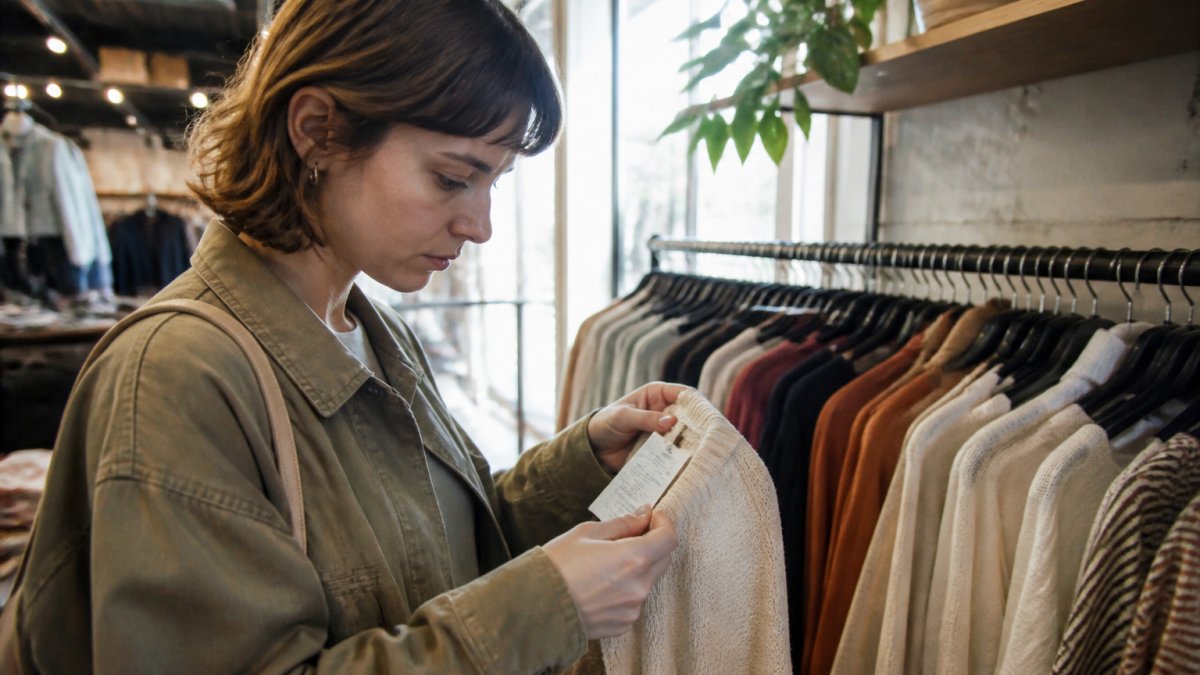
Ask these questions before buying:
- Does the brand publish its supply chain details?
- Can you identify where the garment was made?
- Does the brand support causes you believe in?
Brands that answer these questions clearly deserve trust; those that dodge or hide details should raise concerns.
Aligning Your Values With Your Purchase
Your purchase is a vote for the kind of business you want to support.
If faith drives your choices, seek Christian ethical fashion brands that demonstrate their values through giving and transparency.
If environmental impact is your priority, research material sourcing and carbon reduction goals.
Quality matters too. Ethical fashion costs more because workers earn fair wages and materials are sustainable; higher prices reflect true production costs.
| Priority | What to Look For | Red Flags |
|---|---|---|
| Fair Labor | Named factories, audit reports, certifications | Vague sourcing, hidden production |
| Environment | Organic/recycled materials, carbon tracking | Greenwashing claims, no data |
| Faith-Aligned | Mission-driven giving, charitable transparency | No clear cause support |
| Quality | Durable materials, detailed construction | Fast fashion pricing |
Key Differences and Trade-offs Worth Knowing
Christian and secular ethical fashion brands share core values but differ meaningfully.
Shared commitments: Both prioritize fair labor, sustainable materials, transparency, and real impact. Both reject exploitative practices.
Neither category is inherently superior; your choice depends on which values matter most.
Quality and durability matter regardless of category. Ethical clothing should last years, not months, examine stitching, fabric weight, and construction.
Choosing ethical fashion means making intentional decisions about where your money goes. When you choose a brand that supports meaningful causes, building schools in Africa, raising Down Syndrome awareness, or supporting veterans, your wardrobe becomes part of your purpose.
Frequently Asked Questions
What makes a clothing brand ethical?
An ethical fashion brand meets standards across multiple areas: fair labor practices that ensure workers earn living wages and work in safe conditions, environmental responsibility through sustainable materials and waste reduction, supply-chain transparency so consumers can verify claims, and animal welfare protections where applicable. Ethical brands often pursue third-party certifications and openly share information about their production practices. The strongest ethical fashion brands address several of these dimensions consistently, not just one or two.
Are Christian clothing brands more ethical than secular ethical brands?
Christian and secular ethical brands can both achieve strong ethical standards, but they differ in motivation and scope. Christian brands often emphasize faith-based values and community impact alongside labor and environmental practices. Secular ethical brands typically focus on measurable environmental and labor metrics. Neither category is inherently more ethical; the difference lies in priorities. A Christian brand may excel in charitable giving and community support, while a secular brand may lead in carbon-neutral production. Evaluate each brand against the same standards: fair labor, sustainable materials, transparency, and impact.
How can I tell whether a fashion brand's labor claims are credible?
Look for third-party certifications like Fair Trade Certified, B Corp, or SA8000 that verify labor practices independently. Credible brands publish supply-chain transparency reports naming factories and auditing results. Check whether the brand discloses worker wages, benefits, and working conditions publicly. Vague claims like 'ethically made' without specifics are red flags. Reach out directly and ask for proof: Where are products made? Who audits working conditions? How much do workers earn? Brands confident in their practices provide detailed answers; those avoiding specifics are worth questioning.
What should I look for when comparing ethical clothing brands?
Compare brands across five areas: labor practices (fair wages, safe conditions, worker rights), environmental impact (sustainable materials, waste reduction, carbon footprint), supply-chain transparency (disclosed factories, audit reports), certifications (Fair Trade, B Corp, organic), and social mission (charitable giving, community impact). Also evaluate product quality, durability, design, and accessibility, ethical fashion only matters if you'll actually wear it. For faith-based brands, verify that charitable claims are specific and verifiable. Create a priority list: which factors matter most to you? Then score each brand against those priorities rather than assuming all ethical brands are equal.