

Alternatives to Fast Fashion for Christians
8th Oct 2026
Table of Contents
- Why Christians Should Reconsider Fast Fashion
- The Rise of Sustainable Fashion and Conscious Consumerism
- Mission-Driven Apparel: Ethical Clothing Brands for Christians
- How to Identify Ethical Fashion Brands
- Thrifting and Secondhand Clothing as Sustainable Solutions
- How to Shop Ethically on a Budget
- Building a Capsule Wardrobe That Lasts
- Conclusion: Stewardship Through Style
- Frequently Asked Questions
Last Updated: October 7, 2026
Why Christians Should Reconsider Fast Fashion
The fashion industry produces roughly 92 million tons of textile waste annually, most ending up in landfills.
Fast fashion operates on a linear model: make cheap, sell quickly, discard easily. This contradicts the biblical principle of caring for what we've been given.
The good news: alternatives to fast fashion exist that don't require sacrificing style, comfort, or budget. At Love Revolt Clothing, we believe your wardrobe can reflect both your values and your faith.
The Rise of Sustainable Fashion and Conscious Consumerism
Sustainable fashion isn't a trend anymore.
Conscious consumerism means thinking before you buy, choosing quality over quantity. For Christians, it connects directly to creation care.
Instead of buying 52 new items a year, conscious consumers buy fewer pieces that last, researching brands and considering a garment's full lifecycle, not just the price tag.
Greenwashing, when companies market themselves as ethical without real substance, is common. Real ethical brands share supply chain information and are transparent about wages, materials, and environmental impact.
Mission-Driven Apparel: Ethical Clothing Brands for Christians
Several brands combine faith-based values with ethical manufacturing, built on the conviction that commerce can be a force for good.
Love Revolt Clothing: Faith and Charitable Impact
Love Revolt Clothing operates from a straightforward mission: use apparel sales to fund charitable work.
What sets Love Revolt apart is the integration of mission into design. Their urban military aesthetic appeals to Christians who want faith-centered apparel that doesn't look dated or preachy, with modern t-shirts, hoodies, hats, and accessories built for quality.
The brand is veteran-owned, resonating with Christian values of service and sacrifice. Every piece directly funds charitable work as a core part of the business, not a small percentage.
For Christians seeking alternatives to fast fashion, Love Revolt Clothing shows what mission-driven apparel can look like: quality construction, thoughtful design, and a clear commitment to supporting communities in need.
Other Faith-Based Alternatives Worth Exploring
Beyond Love Revolt, several other brands merit consideration for Christians building an ethical wardrobe.
Refined by Grace Boutique offers feminine, faith-inspired pieces for women with modest cuts and intentional aesthetics, encouraging quality-over-quantity shopping, with starting prices around $30.
AOH (Art of Homage) takes a premium streetwear approach to Christian apparel, with modern graphic designs incorporating biblical themes without feeling heavy-handed.
611Armory specializes in bold, masculine designs rooted in Christian conviction, with direct, unapologetic messaging.
Stand Up Now Apparel prioritizes timeless design over trend-chasing.
How to Identify Ethical Fashion Brands
Not every brand claiming to be ethical actually is. Greenwashing is widespread in apparel, and for Christians the stakes are higher than a bad purchase: Scripture ties honest scales and fair dealing to faithful living (Proverbs 11:1, Leviticus 19:13), so a brand's claims are a truthfulness question, not just a sustainability one.
Here is a practical vetting framework you can run on any brand in about fifteen minutes.
Step 1: Check supply chain transparency
Ethical brands publish where and how their clothing is made, naming factories and sharing wage and material sourcing details. Vagueness is a red flag, especially brands that talk about "ethical partners" but never name a facility.
Step 2: Verify third-party certifications
Certifications require independent verification, making them far more reliable than self-proclaimed "ethical" labels. The ones worth knowing:
- Fair Trade Certified, verifies labor standards and premium payments to workers.
- GOTS (Global Organic Textile Standard), verifies organic fiber content and processing standards.
- B Corp Certification, verifies a company meets scored social and environmental performance standards.
- OEKO-TEX Standard 100, verifies finished textiles are tested for harmful substances.
None are perfect, and a brand can be ethical without them, but loud ethical claims with zero third-party verification deserve scrutiny.
Step 3: Read the materials list like a label
Ethical brands explain why they chose specific fabrics. Organic cotton, recycled materials, and natural fibers generally carry lower environmental footprints than conventional synthetics. Recycled polyester beats virgin plastic, but organic cotton is often preferable for breathability and microplastic shedding.
Step 4: Test the mission claim
Ask whether giving back is central to the business model or a side initiative. Brands like Love Revolt integrate charitable giving into core operations, not as an afterthought. A brand that occasionally donates "a portion of proceeds" is structurally different from one where mission funds the business.
Step 5: Check durability signals
Look at customer reviews mentioning durability and quality. Does the clothing actually last, or fall apart after a few washes? Established brands with a track record are safer bets than newer companies making big promises.
A Christian-specific filter
Beyond the standard checklist, ask one more question: does this brand treat people as image-bearers or as inputs? That shows up in whether workers are named, wages disclosed, and garment workers treated with dignity. You won't always get a clean answer, but brands that try honestly tend to be worth supporting.
Red flags to walk away from
- No factory names anywhere on the site.
- Sustainability language that never mentions workers, only materials.
- A "giveback" page with no numbers, no partners, and no dates.
- Prices so low that ethical production is mathematically impossible.
- Certifications claimed in marketing but absent from the certifying body's public directory.
You do not need a perfect brand. You need a brand you can actually verify. Verification is the difference between stewardship and wishful thinking.
Thrifting and Secondhand Clothing as Sustainable Solutions
One of the most effective ways to reject fast fashion is to buy less new clothing. Thrifting and consignment extend garment lifecycles and keep textiles out of landfills.
Secondhand shopping has become mainstream.
The environmental benefit is substantial: a garment worn twice instead of discarded is twice as efficient.
Thrifting is unbeatable for your budget, letting you build a quality wardrobe for a fraction of retail prices while reducing demand for new production and its environmental and labor costs.
How to Shop Ethically on a Budget
The misconception that ethical fashion is expensive keeps many people locked into fast fashion. The real problem isn't price, it's planning: most people buy reactively, exactly the behavior fast fashion is engineered to exploit. A budget reframes the exercise.
Here is a concrete system you can run this month.
Set a monthly clothing number, not a per-item number
Pick a monthly clothing budget you can sustain, even a modest fixed amount. The number matters less than the discipline of spending against a cap. Shopping against a monthly cap instead of a per-item price stops you comparing a $40 shirt to a $10 shirt and starts you comparing it to the rest of your month.
Use cost-per-wear math
Cost-per-wear is the most useful calculation in ethical fashion: divide the price by the number of times you expect to wear the item.
- A $10 shirt worn 8 times before it pills or fades: about $1.25 per wear.
- A $40 shirt worn 150 times over three years: about $0.27 per wear.
The cheaper shirt is more expensive per wear. This is the foundation of budget-conscious ethical shopping and the argument that convinces skeptical shoppers.
Build in this order
- Shop your closet first. Before buying anything new, assess what you own. Often the most ethical purchase is the one you don't make.
- Thrift the gaps. Once you know what's missing, fill it secondhand. Thrift and consignment are the most budget-friendly way to build an ethical wardrobe.
- Buy new only for the pieces you wear constantly. Basics get worn hardest, so durability matters most there.
Mix high and low deliberately
You don't need everything to be premium. Pair one quality investment piece with affordable basics from ethical brands. Love Revolt Clothing offers quality and mission, making it a reasonable anchor for a mixed wardrobe.
Time your purchases
Ethical brands do discount inventory, especially at season changes. Sign up for email lists and follow brands on social media to catch sales without paying full retail. End-of-season markdowns on neutral basics are often the best value in ethical fashion all year.
The swap method
Every time you're tempted by a fast fashion impulse buy, redirect that exact amount into a slow-fashion fund. A $25 impulse purchase becomes $25 toward one durable piece, and over a few months the fund buys something you'll actually keep.
Repair before you replace
Learning basic mending, replacing a button, fixing a hem, patching a small hole, extends garment life for years at almost no cost. Many libraries and community centers offer free or low-cost repair workshops. Repair is stewardship in its most literal form.
A note on income reality
If your budget is genuinely tight, the honest answer is that secondhand and repair should carry most of your wardrobe, and new ethical purchases should be rare and deliberate. That is not a compromise. It is the most faithful version of the practice.
Building a Capsule Wardrobe That Lasts
A capsule wardrobe is a curated collection of versatile pieces that work together, the antidote to fast fashion's "more is more" mentality.
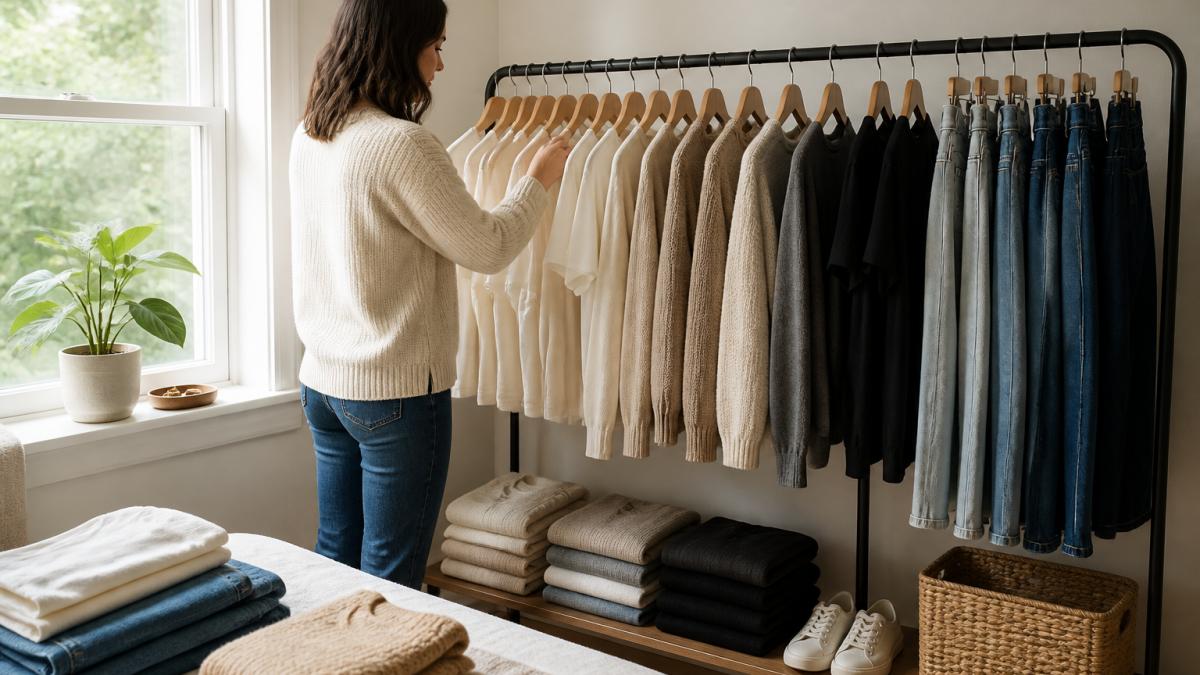
Start with wardrobe staples: well-fitting jeans, neutral t-shirts, a white button-up, a blazer, and a few sweaters.
Choose timeless styles over trendy ones. A classic white t-shirt works for years; a graphic tee with this season's meme won't.
Invest in quality basics, where durability matters most since they get worn constantly.
Build around what you already own.
Quality over quantity is the point.
Conclusion: Stewardship Through Style
Choosing alternatives to mainstream fast fashion isn't about judgment or perfection. It's about alignment: your purchases reflect your values, intentionally or by default.
For Christians, the connection between consumption and stewardship is direct.
Love Revolt Clothing demonstrates what happens when a brand centers mission alongside quality.
Whether you choose mission-driven brands like Love Revolt, ethical retailers committed to supply chain transparency, or the secondhand market, you have options.
Frequently Asked Questions
What are the main alternatives to mainstream fast fashion for Christians?
Mission-driven apparel brands like Love Revolt Clothing combine faith-based messaging with charitable impact, supporting causes like clean water wells and Down Syndrome awareness. Other options include thrifting and secondhand shopping, which reduces textile waste and aligns with stewardship principles. Sustainable brands using organic cotton and fair-trade manufacturing, plus building a capsule wardrobe of timeless pieces, offer practical alternatives to the linear fast-fashion model.
How can I tell if an ethical clothing brand is really ethical?
Look for transparent supply chain information, Fair Trade or GOTS certifications, and clear documentation of manufacturing practices. Verify charitable claims by checking if the brand publishes donation reports or partners with recognized organizations. Ask specific questions about where garments are made, what wages workers receive, and what materials are used. Brands committed to ethical manufacturing typically provide this information readily on their websites or in customer communications.
Is thrifting and secondhand clothing a good alternative to fast fashion?
Yes. Thrifting extends garment longevity, reduces landfill waste, and typically costs less than buying new. Secondhand shopping aligns with Christian stewardship by maximizing the life of existing resources rather than contributing to the environmental footprint of new production. Quality thrifted pieces often outlast fast-fashion items and encourage a conscious consumerism mindset focused on quality over quantity.
How can I shop ethically on a budget without compromising my values?
Prioritize thrifting and consignment stores for affordable options. Build a capsule wardrobe with versatile, timeless basics in neutral colors that mix and match easily. Choose brands offering sustainable basics. Focus on garment longevity rather than quantity, one durable piece worn for years costs less per wear than disposable fast fashion. Many ethical brands offer seasonal sales or student discounts that make values-aligned shopping more affordable.
Your wardrobe tells a story. Make sure it's the story you want to tell.